25 Kawaii Pixel Art Character Ideas You’ll Actually Want to Draw
Affiliate Disclosure
This post contains affiliate links. Pixels and Bloom may earn a commission when you purchase through these links, at no additional cost to you. All opinions are our own and we only recommend products we believe will genuinely benefit our readers.
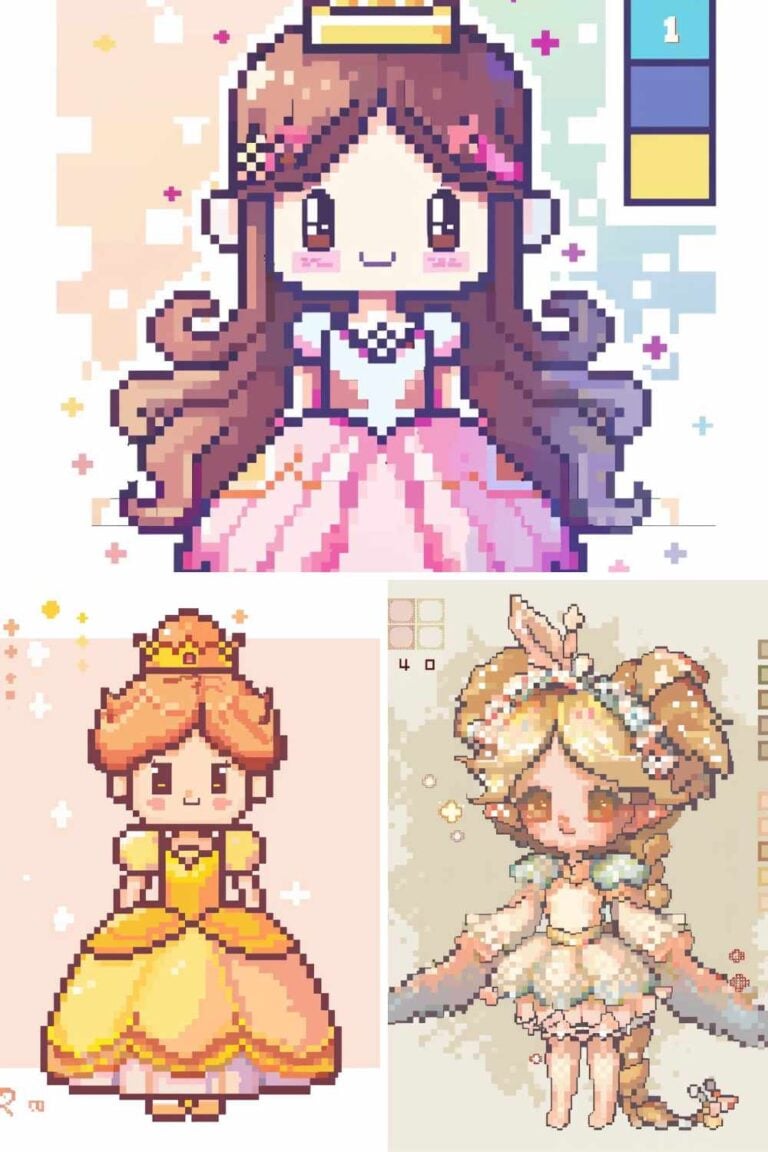
Kawaii pixel art sits at the intersection of two deeply satisfying creative aesthetics — the Japanese art of cuteness and the deliberate, constraint-driven precision of pixel art. The result is a genre that manages to be simultaneously simple and expressive, minimal and emotionally rich, instantly accessible to beginners and endlessly rewarding for advanced artists.
If you’ve ever scrolled past a tiny round cat with blushing cheeks and thought “I need to make that,” this post is for you. We’re covering 25 kawaii pixel art character ideas across every major category of the genre — food characters, animals, fantasy creatures, seasonal figures, and original designs — with detailed guidance on what makes each one work and how to approach the design.
Kawaii, for those unfamiliar, is a Japanese word meaning “cute” that has evolved into a full aesthetic philosophy encompassing character design, fashion, art, and popular culture. Its visual language is specific: oversized heads, tiny or absent mouths, large shining eyes, round soft body shapes, pastel color palettes, and an overall quality of innocence and warmth. These principles translate almost perfectly onto a pixel grid — in fact, kawaii aesthetics and pixel art constraints reinforce each other beautifully, because both forms celebrate simplicity, clarity, and maximum emotional impact from minimum visual elements.
Before diving in, if you’re new to pixel art character design generally, our how to draw cute pixel art characters from scratch guide covers the foundational techniques — head-to-body ratios, color palette building, face design, shading — that underpin everything in this post. And if you’re coming from our 50 cute pixel art ideas post and want to go deeper into the kawaii direction specifically, you’re in exactly the right place.
The Visual Language of Kawaii: A Quick Design Primer
Before the ideas list, a few design principles that apply specifically to kawaii pixel art characters and will make every design on this list better:
The face is everything. In kawaii design, the face carries nearly all the character’s personality and emotional weight. Bodies are often simplified to near-abstraction — a small oval torso, tiny stub limbs — while the face gets maximum detail and care. At 32×32, your character’s head should occupy roughly 40–50% of the total canvas height.
Eyes define the character. Kawaii eyes come in several standard types, each with a different emotional register:
- Dot eyes (single pixels): simple, mysterious, slightly deadpan
- Oval eyes (2×3 or 3×3): warm, open, friendly — the most classic kawaii style
- Star eyes (asterisk shape): excited, delighted, energized
- Half-closed eyes (top half of oval covered by a curved line): sleepy, relaxed, content
- Sparkle eyes (large oval with multiple highlight points): enchanted, in love, wonder-struck
Blush marks are a superpower. Two small clusters of pink pixels placed on the cheeks below the eyes instantly push any character into kawaii territory. They suggest warmth, shyness, or happiness — sometimes all three at once. Use them deliberately; they shift a character’s personality significantly.
Round shapes over angular ones. Every element of a kawaii character benefits from maximum roundness — round head, round body, round hands, rounded corners on accessories. Angular shapes read as aggressive or adult; round shapes read as soft, safe, and young.
Pastel palettes with warm accents. Classic kawaii uses soft pastels — pale pink, lavender, mint, baby blue, peach, cream — with small warm accent colors (coral, gold, rose red) for eyes, accessories, and blush marks. The palette should feel like it belongs in a sweet shop or a spring garden.
With those principles in mind, here are 25 kawaii pixel art character ideas that put them all to work.
Food Kawaii Characters (Ideas 1–7)
Anthropomorphized food — everyday edibles given faces and tiny limbs — is one of the most popular and enduring categories of kawaii art. The concept is inherently charming: your breakfast has feelings, and those feelings are mostly happiness and mild surprise.
1. Onigiri (Rice Ball) A white triangular rice ball with a black nori seaweed band across the middle, a simple oval face centered in the white upper portion, tiny nub arms, and optional fillings peeking from the sides. The onigiri is the single most iconic kawaii food character — it appears in countless games, sticker packs, and merchandise worldwide. The design challenge is giving personality to a shape that’s essentially just a white triangle. The face does all the work: try a satisfied half-closed-eyes expression, or a surprised wide-open look.
2. Strawberry with Legs A large, round strawberry with the classic seed dots and leafy green top, a cute face on the front, and two tiny round legs sticking out the bottom. The key design choice here is the proportion — the strawberry body should be huge and dominant, with the legs and face feeling almost like afterthoughts that bring it to life. Use a vivid red with bright highlights for the body; the face is just eyes and an optional small mouth.
3. Sleepy Avocado A round avocado slice (the cross-section view showing the green flesh, lighter inner layer, and a large brown pit) with half-closed sleeping eyes and small blush marks. The pit becomes the character’s “belly button” or a convenient face anchor. The sleeping expression is perfectly suited to an avocado — there’s something inherently drowsy about the fruit’s soft, rich quality.
4. Boba Tea Cup A clear cup with a brown milk tea body, visible round tapioca pearls, and a wide striped straw — all given a face on the cup front with wide sparkle eyes and a small happy mouth. Boba tea kawaii characters are enormously popular in the pixel art community and on merchandise. The layered colors inside the cup (dark tea at the bottom, lighter milk tea above, foam at the top) create a beautiful cross-section of color without requiring any special technique.
5. Ramen Bowl Character A deep round bowl of ramen with a face on the bowl’s front and little arms gripping the rim from the inside. The bowl itself is the character — a beige or white ceramic bowl with a cheerful expression, while the ramen contents (noodles, egg, toppings) form a colorful “hair” arrangement spilling from the top. This design concept — where food contents become the character’s hair — is a satisfying and original approach to food character design.
6. Donut with Sprinkles A round donut with a frosted top in a pastel color, multicolored sprinkle dots scattered across it, and a simple face on the lower half of the ring. The hole in the middle of the donut creates an interesting compositional challenge — how do you place a face on a shape with a hole in it? The most elegant solution is to give the face to the lower semicircle, with the hole serving as negative space above.
7. Toast with Butter A golden-brown toast slice with a melting butter pat on top, a small face on the bread surface, and little round arms. The toasty warmth of the color palette (golden yellows, warm browns) makes this character feel cozy and breakfast-friendly. Add a tiny heart above the character’s head for extra kawaii intensity.
Animal Kawaii Characters (Ideas 8–14)
Animals in kawaii style take their natural cuteness and amplify it through design exaggeration — larger heads, rounder bodies, bigger eyes, softer colors. These designs are reliably popular across social media and make excellent sticker and product designs.
8. Shiba Inu Puppy A round orange-brown Shiba Inu face with the characteristic white markings around the muzzle, dark almond-shaped eyes, and small pointed ears. The Shiba Inu’s natural markings do most of the character work — the contrast between the warm orange fur and the white muzzle area is naturally graphic and readable at small sizes. Add a slightly skeptical or superior expression (a common Shiba personality trait) for authentic charm.
9. Calico Cat A round white cat with patches of orange and black distributed across the head and body in a natural calico pattern, green or gold eyes, and tiny pink inner ears. The calico’s multi-colored coat is a wonderful pixel art exercise in placing color patches organically rather than in geometric patterns. Let the patches be imperfect and irregular — that’s what makes them feel like fur rather than paint.
10. Chubby Penguin An extremely round black-and-white penguin with a tiny yellow beak, small flipper arms, and an expression of serene contentment. The kawaii penguin takes the already-cute penguin silhouette and exaggerates it further — maximum roundness, minimum height, a perfectly circular body that barely has room for the tiny head above it. A colorful scarf or bowtie accessory adds personality without cluttering the clean silhouette.
11. Panda with Dumpling A round white panda with black eye patches, small round ears, and both tiny arms wrapped around an equally round white dumpling. The panda-holding-dumpling concept is doubly kawaii — two round white things, one of which has a face. The physical interaction (the panda clutching the dumpling close) creates an instant narrative of affection.
12. Bunny in a Cup A small white rabbit sitting inside an oversized teacup, just its head and ears visible above the rim, with wide curious eyes and small pink inner ears. The contrast between the large cup and the small rabbit creates the classic kawaii “small creature in a big container” composition — inherently cute because it emphasizes the character’s smallness and vulnerability.
13. Frog with a Raincoat A round green frog wearing a tiny yellow raincoat and boots, standing in a puddle with a happy expression. The raincoat is the character-defining accessory here — the contrast between the frog’s natural greenness and the bright yellow coat is striking, and the detail of tiny boots on tiny frog feet is irresistible. Add a small raindrop or two falling nearby to place the scene.
14. Baby Chick in an Eggshell A tiny yellow chick sitting in the lower half of a broken eggshell, with a small tuft of head feathers, oversized eyes, and a tiny pointed beak. The eggshell acts as a natural “container” for the character — like the bunny in a cup, the shell frames the chick and emphasizes its newness and smallness. A single crack running up the shell side adds storytelling detail.
Fantasy and Magical Kawaii Characters (Ideas 15–20)
Fantasy kawaii designs combine the visual sweetness of kawaii aesthetics with magical subject matter — witches, ghosts, fairies, and enchanted objects that are simultaneously mysterious and adorable. This genre is consistently one of the strongest performers on social media and merchandise platforms.
15. Sugar Skull Fairy A tiny fairy with delicate wings and a sugar skull face — white base with simple floral patterns around the eyes and forehead — in a pastel pink and lavender palette. The sugar skull motif, rendered in soft kawaii colors rather than the traditional vivid Day of the Dead palette, creates a character that’s cute rather than spooky, with just a hint of edge. The wings can be rendered with a subtle transparency effect — see our how to create a Disney princess in pixel art guide for iridescent wing techniques that apply here.
16. Moon Rabbit A round white rabbit sitting on or inside a crescent moon, with soft grey shading, large shining eyes, and a small mortar and pestle (referencing the East Asian moon rabbit myth). The crescent moon serves as a seat or nest for the rabbit, creating a naturally curved compositional frame. Use a deep navy blue sky background with scattered star pixels for maximum atmosphere.
17. Tiny Ghost with a Bow A small, round ghost shape — white with a slightly translucent quality suggested by using off-white rather than pure white for the body — with a colorful bow on top of its head and a gently cheerful expression. The bow is the personality element that distinguishes this from a generic ghost — it suggests the ghost has strong personal style and is not remotely interested in being scary. Try different bow colors: red bow, rainbow bow, floral bow.
18. Witch Familiar Cat A small black cat with bright golden eyes, a tiny witch hat perched between its ears, and a thin curl of magical sparkle dust rising from one paw. The witch familiar is a classic of the kawaii fantasy genre — the black cat’s high-contrast silhouette against a light background is naturally graphic, and the witch hat adds immediate magical context. The golden eyes are the key detail — warm gold against deep black is one of pixel art’s most effective color contrasts.
19. Mushroom Fairy House with Face A red-capped mushroom with white spots, given a face on the stem, tiny arms, a round door, and glowing windows — somewhere between a fairy house and a sentient character. This combines the popular mushroom house design from our 30 easy pixel art ideas post with full kawaii character anthropomorphization. The challenge is deciding how much it’s a house (with architectural details) and how much it’s a character (with a face and arms). The most effective approach makes it clearly both.
20. Cloud with a Rainbow A round, puffy white cloud character with large eyes and blush marks, wearing a rainbow like a colorful scarf draped from one side. The rainbow as an accessory — rather than a background element — is a playful concept inversion. The cloud’s rounded, soft form is perfect for kawaii rendering, and the seven rainbow colors provide all the accent color you need against the white-and-sky-blue palette.
Seasonal and Holiday Kawaii Characters (Ideas 21–25)
Seasonal kawaii characters are among the most commercially viable pixel art designs — they have a built-in audience, a clear purchase motivation (gifting, decoration), and the kawaii aesthetic adds a layer of universal appeal that transcends cultural specificity. These designs connect naturally to the seasonal content in our 50 Christmas pixel art designs and 47 Thanksgiving pixel art designs posts.
21. Kawaii Pumpkin A round orange pumpkin with carved jack-o-lantern features — but rendered kawaii rather than scary. Instead of jagged teeth and menacing eyes, use large round eyes with sparkle highlights and a small curved smile. Add blush marks, a tiny green curling vine, and a small leaf on the stem. The kawaii treatment completely transforms the Halloween pumpkin from spooky to endearing.
22. Christmas Pudding Character A round dark brown pudding with white icing dripping down the sides, a sprig of holly on top, and a warm, sleepy expression. The Christmas pudding’s naturally round, compact shape is ideal for kawaii design — it barely needs modification from its real form to become a character. The holly accessory on top reads as a little hat, reinforcing the character quality.
23. Snowflake with a Face A symmetrical six-pointed snowflake with a tiny face at the center — the six arms of the snowflake forming a natural frame around the central face. This is one of the most technically interesting kawaii designs on this list because it requires precise pixel symmetry on a complex shape. Use Aseprite’s symmetry mode (six-point radial symmetry) for efficiency, then add the face manually at the center.
24. Kawaii Sun and Moon Duo Two companion characters designed as a matched set: a golden sun with a warm, cheerful expression and sun ray “hair” radiating outward, and a silver crescent moon with a dreamy, half-asleep expression. Designing characters as pairs or duos creates a natural product set — they work individually but are more compelling together. The warm/cool color contrast between the golden sun and silver-blue moon makes for excellent visual balance.
25. Cherry Blossom Spirit An original character — a small spirit that embodies the cherry blossom season, with pale pink skin, flower-petal hair, a white and pink kimono, and large, serene eyes. This is an original character concept rather than an anthropomorphized object, and it’s the most ambitious design on this list. It requires the character drawing skills from our how to draw cute pixel art characters from scratch guide applied to an original concept. The reward is a genuinely original kawaii character that could anchor a merchandise line or a social media brand identity.
Technical Tips for Kawaii Pixel Art
Getting Blush Marks Right
Blush marks seem simple but have specific placement and sizing rules that separate good from great:
- Place them below and slightly outside the outer edge of each eye
- Use a pink that’s 2–3 steps lighter and more desaturated than your character’s warmest skin shadow
- Size them at 2×2 pixels on a 32×32 canvas, 3×3 on a 48×48 canvas
- Optional: use a 2×2 cluster of slightly different pink tones for a softer, more natural blush
Expressing Emotion in Tiny Spaces
At small canvas sizes, every emotional expression comes down to minimal pixel changes. Here’s a quick reference for kawaii expressions at 32×32:
Happy: Oval eyes at normal height, small curved upward mouth (3 pixels wide, 1 pixel high arc) Very happy: Star or sparkle eyes, open mouth with curved top showing small teeth Sleepy: Eyes reduced to half-ovals (top half covered), no mouth or tiny straight line, blush marks Surprised: Eyes opened wider (one pixel taller than normal), small circular “O” mouth Shy: Eyes averted slightly sideways, hand or paw covering lower face, stronger blush Determined: Eyes with a slight angle at the inner corners (slightly furrowed brow effect), set straight mouth
Palette Suggestions for Kawaii Characters
The classic kawaii palettes lean soft and pastel. Here are three curated starting points:
Sakura palette (spring, gentle): Pale pink (#FFD6E0), lavender (#C9B8E8), mint (#B8E8C9), cream (#FFF3E0), soft gold (#FFE066), rose (#FF91A4)
Candy palette (sweet, playful): Bubblegum pink (#FF85A1), sky blue (#85C1FF), lemon (#FFE066), mint (#85FFD4), lilac (#D485FF), coral (#FF8566)
Night sky kawaii (dreamy, magical): Deep navy (#1A1A3E), lavender (#9B8EC4), pale pink (#FFB3CC), soft gold (#FFD166), white (#FAFAFA), silver (#C8C8D4)
From Kawaii Characters to Products and Profiles
Kawaii pixel art is one of the strongest-performing categories on print-on-demand platforms. The aesthetic has enormous cross-demographic appeal — it’s beloved by children, teenagers, young adults, and nostalgic older fans of Japanese pop culture alike. Stickers are the natural home for kawaii designs, and sticker sales on platforms like Redbubble consistently outperform most other product categories for cute, graphic designs.
Printify is the platform we recommend for turning your kawaii pixel art into physical products — t-shirts, tote bags, phone cases, enamel-pin-style sticker sheets, mugs, and cushions all work beautifully with kawaii designs. Our complete guide to the top pixel art print-on-demand shops for selling your designs covers the full setup process, file preparation for print, and which products perform best for this aesthetic specifically.
For social media, kawaii pixel art avatars and profile pictures are among the most effective personal branding choices in the pixel art community. Our posts on 10 pixel art PFP ideas that look great on any platform and 30 pixel art avatar ideas for your social media profiles both feature kawaii-style characters prominently — because they work.
Setting Up Your Workspace for Kawaii Design Sessions
Kawaii pixel art sessions tend to be long and deeply absorbing — the precision required for tiny facial expressions and careful color placement creates a focused, meditative state that makes hours disappear. Supporting that state with a comfortable physical workspace makes a genuine difference to how long and how joyfully you can work.
A height-adjustable standing desk from Flexispot is particularly valuable for the kind of focused, screen-intensive work that kawaii character design involves. Alternating between sitting and standing at regular intervals sustains the physical comfort and mental sharpness that detailed creative work demands.
For input precision, a high-DPI Razer mouse gives you the cursor control that kawaii character work specifically demands — placing a 2×2 blush mark in exactly the right position, getting the eye highlight pixel on the correct corner, rendering a 3-pixel smile with the precise curve that reads as “happy” rather than “neutral.” That level of precision is meaningfully supported by a quality input device.
For Minecraft players in the community, kawaii characters make wonderful pixel art builds — especially in creative mode servers. Shockbyte and GG Servers both offer reliable server hosting for communities built around creative Minecraft building, with Shockbyte being particularly well-suited for smaller groups and GG Servers offering strong performance for larger communities.
Final Thoughts
Kawaii pixel art is one of the most joyful creative spaces you can work in. The aesthetic is warm, the community is welcoming, the subjects are delightful, and the designs have genuine commercial value. Whether you work through five ideas or all twenty-five, the process of rendering small, round, expressive characters in a constrained pixel grid is inherently satisfying in a way that few other creative activities match.
Start with the onigiri. Or the ghost with a bow. Or the pumpkin — whichever speaks to you most clearly right now. Get it on the grid, give it a face, add the blush marks, and see what emerges. You’ll be surprised how quickly “just trying it” turns into a genuine creative practice.
For more kawaii-adjacent inspiration, our 50 cute pixel art ideas to draw when you need inspiration post has plenty of character concepts that overlap with the kawaii aesthetic. And for the deeper character technique that will make your kawaii designs genuinely excellent, our how to draw cute pixel art characters from scratch guide is required reading.
Happy drawing. 🌸
More Pixel Art Posts You’ll Love
- What Is Pixel Art? A Complete Beginner’s Introduction
- Best Pixel Art Software in 2026: Honest Review for Every Skill Level
- How to Draw Cute Pixel Art Characters from Scratch (Beginner’s Guide)
- How to Create a Disney Princess in Pixel Art: Grid, Colors and Tips
- Top Pixel Art Print-on-Demand Shops for Selling Your Designs
- 50 Cute Pixel Art Ideas to Draw When You Need Inspiration
- 30 Easy Pixel Art Ideas Perfect for Absolute Beginners
- Cool Pixel Art Pieces That Went Viral on Social Media
- 15 Disney Pixel Art Designs Fans Have Recreated (And How They Did It)
- 10 Pixel Art PFP Ideas That Look Great on Any Platform
- 40 Small Pixel Art Grid Ideas You Can Finish in Under an Hour
- 25 Pixel Art Inspo Accounts to Follow on Instagram
- 30 Pixel Art Avatar Ideas for Your Social Media Profiles
- 50 Christmas Pixel Art Designs to Celebrate the Holiday Season
- 47 Thanksgiving Pixel Art Designs to Celebrate the Season of Gratitude
- 20 Retro-Inspired Pixel Art Patterns and Where They Come From