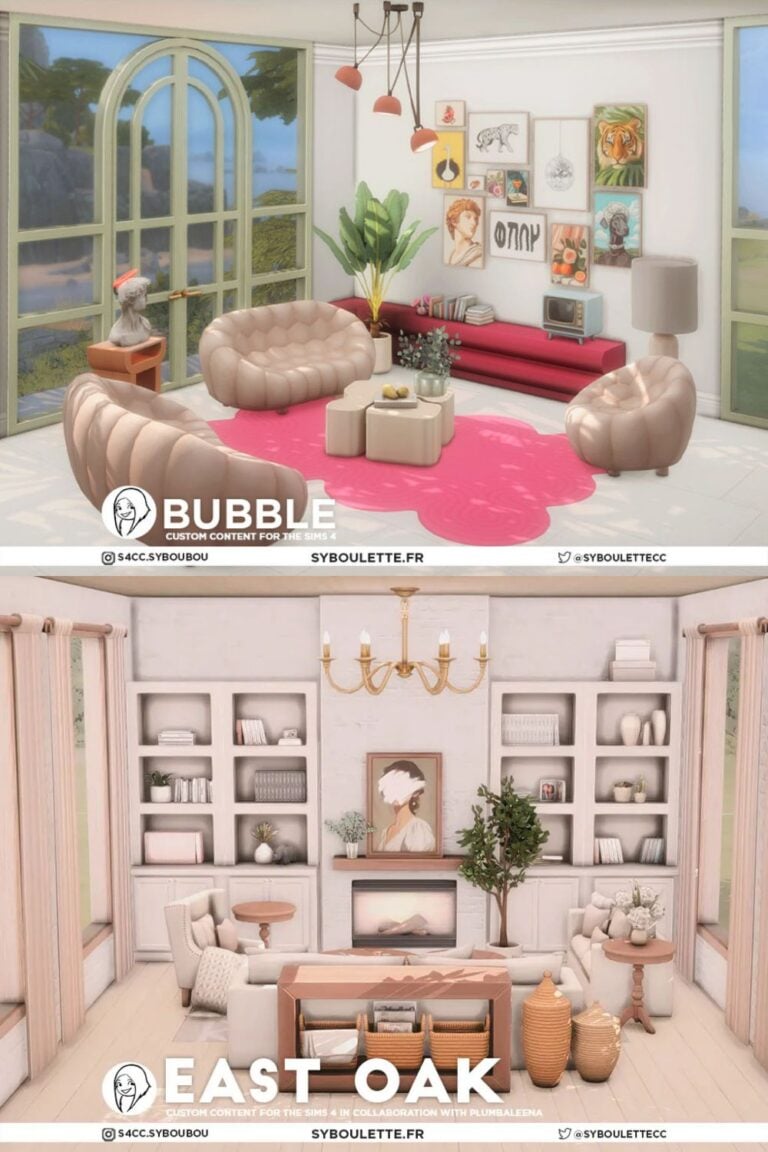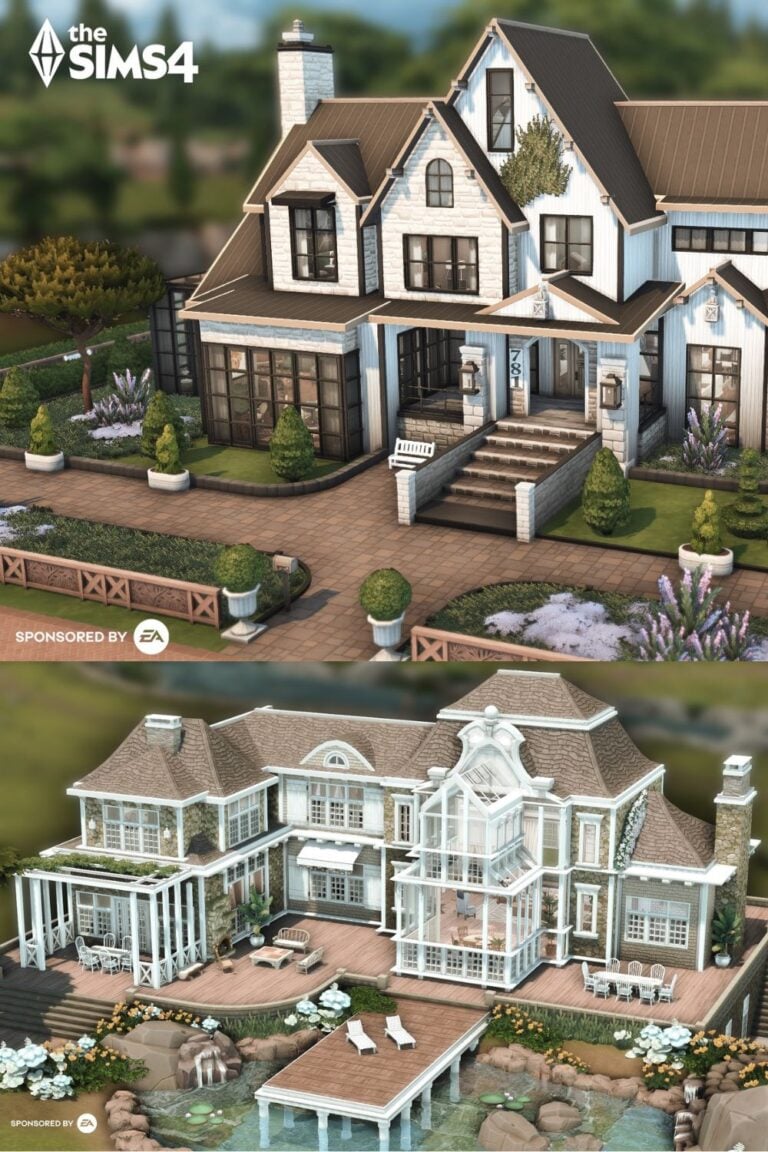

35 Sims 4 house inspiration ideas That Will Ignite Your Next Build
Affiliate Disclosure
This post contains affiliate links. Pixels and Bloom may earn a commission when you purchase through these links, at no additional cost to you. All opinions are our own and we only recommend products we believe will genuinely benefit our readers.
You Don’t Have a Building Problem. You Have an Inspiration Problem.
You know how to place walls. You know how to use the roof tool. You’ve got the cheats memorized.
But you open a fresh lot and your mind goes completely blank and you end up building the same beige box you always build. Not because you lack skill. Because you lack a spark.
Inspiration is the actual first step of any great build, and it’s the step most players skip. They go straight to Build Mode without a clear vision, which is why so many builds end up looking like variations of the same safe template.
This post is your spark file.
We’ve pulled together 35 Sims 4 house inspiration ideas organized by where to look, what aesthetic to explore, and how to translate real-world design movements, internet aesthetics, pop culture, nature, and architecture into build concepts that feel fresh, personal, and deeply satisfying to create.
What’s inside this post:
- Where the best builders actually find their inspiration (and how to use those same sources)
- 35 specific inspiration concepts, each with a build direction and key visual cues
- Interior inspiration organized by aesthetic from Cottagecore to Old Money to Coastal Grandmother
- Exterior inspiration: color palettes, rooflines, landscaping approaches, and architectural styles
- Real-world sources to mine for Sims builds that stand apart in the Gallery
- A complete FAQ covering the most searched inspiration and building questions
- How to make your best builds work for you beyond the game itself
Let’s get inspired.
Where Great Builders Find Their Inspiration
Before we dive into the 35 ideas, let’s talk about sources because the best-looking Sims 4 builds almost always trace back to a specific reference outside the game.
Real estate listings: Zillow, Rightmove, and Realtor.com are goldmines. Filter by architectural style modern, Victorian, farmhouse, Mediterranean and browse exterior photos. The community has built entire Sims 4 houses that are near-perfect recreations of real Zillow listings, room by room.
Pinterest boards: Search “interior design [aesthetic]” and save a mood board before you build. Searching “cottagecore interior,” “dark academia bedroom,” or “coastal grandmother living room” gives you specific colour palettes, furniture types, and material combinations you can directly translate into Sims 4 swatches.
Interior design accounts on Instagram and TikTok: Builders like Simlicy, Doctor Ashley, and plantsimgirl regularly share their process including the real-world references that inspired their builds. Following Sims 4 builders and real-world interior designers in your feed cross-pollinates both streams of inspiration.
Architecture and design magazines: Architectural Digest, Dezeen, and Dwell are free to browse online. Their “house tour” features full photo essays of stunning homes are perfect Sims 4 reference material.
Film and TV sets: Some of the most distinctive builds in the Sims 4 community are recreations of iconic TV and film locations. The specificity of a well-known setting gives a build immediate personality and storytelling power.
The 35 Sims 4 House Inspiration Ideas
Internet Aesthetic Inspiration
These are the aesthetic movements currently dominating Sims 4 TikTok, Pinterest, and the Gallery each one has a distinct visual language you can translate directly into a build.
1. Cottagecore
The vision: A romanticized, hyper-feminine interpretation of rural life. Wild gardens spilling over stone walls, herbs drying in a farmhouse kitchen, a reading window seat overlooking a meadow, mismatched vintage china in an open-shelf kitchen.
Build direction: English or French countryside cottage. Stone or whitewashed plaster exterior, thatched or terracotta tile roof, surrounded by an unkempt-but-beautiful garden of wildflowers, roses, and vegetable beds.
Key visual cues: Floral wallpaper, exposed wooden beams, stone fireplace, vintage furniture in soft creams and greens, an overflowing garden with winding paths.
Best pack: Cottage Living. It was practically designed for this aesthetic, the farmhouse items, animal pens, and garden content are perfect. Pair with Henford-on-Bagley as your world.
Colour palette: Sage green, cream, dusty rose, warm white, terracotta, muted lavender.
2. Dark Academia
The vision: Gothic intellectual melancholy meets prestigious boarding school. Candlelit libraries, oil portraits in gilded frames, leather-bound books stacked on mahogany shelves, a writing desk in a tower room.
Build direction: A Victorian or neo-Gothic manor with turrets, arched windows, and a grand entrance hall. Stone exterior with ivy. Every room inside tells a story of learning, mystery, and slightly unsettling elegance.
Key visual cues: Floor-to-ceiling bookshelves, Persian rugs, dark wood panelling, candleabras, stone fireplaces, moody oil-painting wall art, a grand piano in the sitting room.
Best pack: Ravenwood (Life & Death expansion) and the Castle Estate Kit. The combo is unbeatable for this aesthetic.
Colour palette: Deep brown, forest green, burgundy, black, gold accents, cream.
3. Cottagecore on the Water (Coastal Cottagecore)
The vision: The collision between cottagecore warmth and coastal simplicity. A small, weather-worn fishing cottage right on the water, with a garden of sea lavender, a rocking chair on a porch facing the waves, and a kitchen that smells like salt and bread.
Build direction: Small, single-story cottage on a Sulani or Brindleton Bay waterfront lot. Natural wood exterior aged to silver-grey, a small dock, pots of coastal plants, net and driftwood decor.
Key visual cues: Bleached wood, sea glass colours, rattan furniture, linen fabrics, shells and pebbles in terracotta pots, old maps on walls, a well-worn kitchen with open shelving.
Colour palette: Sea glass green, weathered white, sand, warm grey, navy blue accents.
4. Fairycore
The vision: An enchanted, magical world of mushrooms, moss, butterfly wings, and whimsical wonder. A home that looks like it grew out of the forest floor itself organic, glowing, and delightfully impossible.
Build direction: A hobbit-hole style dwelling or a small structure almost completely enveloped by nature. Curved or irregular shapes. Mushroom-shaped roof sections. A garden that looks wilder and more magical than any human would plant deliberately.
Key visual cues: Glowing fairy lights strung everywhere, oversized mushroom decor (debug objects), butterfly wall art, mossy textures on walls, flower garlands, stained glass-effect windows, a pond with lily pads just outside.
Best pack: The Enchanted by Nature DLC released in 2025 added Fairy Sims and built specifically for this aesthetic, it’s the perfect pack for a full fairycore build.
Colour palette: Lavender, soft mint, blush pink, warm gold, moss green, mushroom brown.
5. Old Money / Quiet Luxury
The vision: Wealth that doesn’t need to announce itself. Understated, timeless, and expensive-looking in the way that comes from quality rather than flash. Think a Connecticut estate, a Cotswolds manor, or a Parisian apartment with original mouldings.
Build direction: A classically proportioned home symmetrical facade, generous proportions, understated but impeccably finished. No bold design statements, just perfectly chosen materials and flawlessly executed detail.
Key visual cues: Neutral palette in cream, camel, and warm grey; antique furniture rather than trendy pieces; quality textiles (velvet, cashmere-looking throws); fresh flowers in simple vases; framed black-and-white photography; a horse oil painting above the fireplace.
Colour palette: Cream, warm white, camel, navy, forest green, aged gold.
6. Coastal Grandmother
The vision: Sun-bleached, relaxed, and deeply cosy. Think an East Hampton beach house that’s been in the family for 40 years slightly faded in the most perfect way, filled with collected objects from travels, and impossibly comfortable.
Build direction: A rambling, single-story or modest two-story beach house. Wide wrap-around porch, a kitchen that is clearly the heart of the home, a breakfast nook with a view of the water, and an outdoor shower by the back door.
Key visual cues: Linen slipcovers, mismatched blue-and-white china, wicker chairs on the porch, faded botanical prints on the walls, a kitchen island in unpainted wood, woven baskets everywhere, fresh hydrangeas in a pitcher.
Colour palette: Faded blue, white, sandy beige, warm linen, soft terracotta, aged wood tones.
7. Maximalist Eclectic
The vision: Collected, layered, and intentionally “too much” in the best possible way. This is the aesthetic of someone who has been everywhere, gathered everything they love, and displayed it all without apology.
Build direction: The exterior can be any architectural style what matters is the interior. Every room is a gallery. Mismatched wallpapers, clashing but complementary colours, art on every available wall surface, shelves filled with objects, plants cascading from every corner.
Key visual cues: Gallery wall arrangements, patterned tiles, velvet furniture in jewel tones, brass and gold accents, multiple rugs layered, global and vintage decorative objects, a bold front door colour.
Colour palette: Jewel tones emerald, sapphire, ruby, amber against a dark or neutral base.
8. Japandi (Japanese + Scandinavian)
The vision: The elegant collision of Japanese wabi-sabi philosophy and Scandinavian hygge warmth. Natural materials, extreme simplicity, warmth without clutter, and a deep sense of calm.
Build direction: A single-story or modest two-story home with very clean lines, low-profile furniture, natural wood and stone throughout, and an almost meditative quietness to every room.
Key visual cues: Light blonde and dark walnut wood used together, paper lantern-style lighting, stone features, low platform beds, a single perfect plant in each room, sliding panel-style doors, an interior courtyard or Zen garden if space allows.
Best world: Tomarang or any Japanese-inspired world setting.
Colour palette: Warm white, cream, ash wood, stone grey, black accents, muted sage.
9. Grandmillennial
The vision: Granny chic intentionally brought back by the younger generation chintz fabrics, antique furniture, ruffles, lace, and a living room that looks exactly like your grandmother’s sitting room but makes you feel absolutely at home.
Build direction: A charming older house, Victorian, colonial, or craftsman with the most warmly decorated interior imaginable. The key is that it’s intentionally nostalgic, not just old.
Key visual cues: Floral chintz sofas, lace curtains, doilies (use debug objects for small lace-like decor), blue-and-white porcelain on open shelves, a sewing room, antique mirrors with ornate frames, dried flower arrangements.
Colour palette: Dusty rose, cream, cornflower blue, sage, warm yellow, antique white.
10. Biophilic Design
The vision: A home that brings the outside in so completely that the boundary between inside and outside nearly disappears. Plants in every corner, natural materials everywhere, a living wall, a greenhouse extension.
Build direction: A contemporary home where every design decision references nature, wood, stone, plants, water features, natural light. Large windows throughout. A dedicated plant room or sunroom/greenhouse addition.
Key visual cues: A living plant wall using bb.moveobjects to layer multiple plant objects on a single wall, a sunken central atrium with trees, floor materials that mimic natural stone or wood grain, a rooftop garden.
Colour palette: Forest green, clay, warm wood, stone, cream, rust orange.
Architectural Style Inspiration
These ideas are drawn from real architectural movements and building traditions each with instantly recognizable visual rules that translate directly into Sims 4 builds.
11. Mid-Century Modern
The vision: 1950s–1960s American residential architecture at its finest. Clean horizontal lines, flat or low-pitched rooflines, integration with the landscape, and that particular combination of optimism and elegance.
Build direction: A single-story or modest two-story home with a strong horizontal emphasis. Flat or gently sloping roof. Floor-to-ceiling windows across the rear facade. Carport rather than enclosed garage. A kidney-shaped pool in the back.
Key visual cues: Exposed wood ceiling beams, a statement terrazzo or tile floor, an Eames-style chair arrangement, a low modular sofa, a brick fireplace as the feature wall, indoor plants in teak pots.
Colour palette: Warm white, teak wood, avocado green, burnt orange, mustard yellow, warm grey.
12. Cape Cod
The vision: Classic American coastal architecture that has remained virtually unchanged for 200 years because it works so perfectly. Simple, symmetrical, and immediately cosy.
Build direction: A low, steep-pitched roof that extends almost to the first floor windows. Shuttered windows flanking a centered front door. Cedar shingle or white clapboard siding. A central fireplace chimney. A dormer window above if going two stories.
Key visual cues: The steep symmetrical roofline is the defining feature. Interior is simple and practical exposed beams, a compact kitchen, a small sitting room with a fireplace, low ceiling height upstairs under the steep roof.
Colour palette: White or grey exterior with black shutters and door; interior in warm whites, navy, and red.
13. Spanish Colonial Revival
The vision: Warm, sunbaked, and richly beautiful white stucco walls, red terracotta tile roofs, arcaded porches, wrought iron detailing, and a central courtyard with a fountain.
Build direction: A U-shaped or courtyard-centered home. White or cream rendered exterior. Red or orange terracotta roof. An arched doorway as the main entrance. A courtyard garden with a tiled fountain at the center.
Key visual cues: Arched windows and doorways, wrought iron railings (use fence pieces), decorative terracotta tiles on floors, dark carved wood furniture, woven rugs, indoor olive trees and succulents.
Best world: Oasis Springs or any desert-world lot.
Colour palette: White, warm terracotta, cobalt blue accents, dark wood, aged gold.
14. New England Saltbox
The vision: One of the most charming and distinctive American colonial forms. The saltbox gets its name from the asymmetrical roofline one side is long and extends nearly to the ground at the back, creating a dramatic silhouette.
Build direction: The defining feature is a two-story front and a dramatically lower, single-story back connected by one long continuous roofline that cascades from the peak all the way down. Painted wood siding, a central chimney, small shuttered windows.
Colour palette: Deep barn red, colonial blue, warm white, or dark grey with white trim.
15. Mediterranean Hillside Villa
The vision: The kind of home you find clinging to a cliff above the Italian coast or perched over a Greek island bay tiered levels that cascade down a slope, wrapping terraces at every level, cypress trees, a pool with an infinity edge.
Build direction: A multi-level home built into a hillside (use the terrain tools and multiple foundation heights). Each level has its own outdoor terrace. The pool, if included, appears to spill over the lowest terrace edge.
Key visual cues: Limestone or warm stone exterior, terracotta tile floors, arcaded loggias, outdoor dining tables under pergolas, terracotta pots overflowing with geraniums and bougainvillea.
Colour palette: Warm limestone, sky blue, terracotta, white, Mediterranean blue.
16. Prairie Style (Frank Lloyd Wright–Inspired)
The vision: Organic architecture that celebrates the horizontal plane and the landscape. The famous Prairie Style homes by Wright feel like they grew from the earth low, wide, and deeply integrated with their natural setting.
Build direction: A very long, very low home with dramatically extended roofline overhangs. Horizontal emphasis in every design element. Built on a lot with significant landscaping the house and garden are designed as one unified composition.
Key visual cues: Wide, overhanging flat roof sections; horizontal banding in the exterior material; integrated planter boxes at ground level; very large art-glass style windows; an open interior focused on one central fireplace core.
Colour palette: Earth tones ochre, sienna, brown, warm grey, forest green.
17. French Parisian Apartment
The vision: The quintessential urban European interior high ceilings with ornate mouldings, tall casement windows overlooking a cobblestone courtyard, parquet floors that creak pleasantly underfoot, and an indefinable sense of lived-in sophistication.
Build direction: An apartment unit within a City Living or For Rent apartment building. The exterior is classic Haussmannian limestone. The interior has the key Parisian markers: a herringbone wood floor, floor-to-ceiling windows, exposed ceiling coving, a marble fireplace.
Key visual cues: Herringbone floor pattern (use the diagonal tile placement), ceiling roses, tall white panelled shutters, a kitchen with open shelving and copper pots, a small wrought iron balcony with potted geraniums.
Best world: San Myshuno apartment lots.
Colour palette: Warm white, aged gold, parquet wood, muted grey-blue, dusty rose, marble.
18. Tropical Modernism
The vision: A contemporary architectural style developed in warm-climate regions open to the breeze, connected to the garden, and using natural materials in modern geometric forms. Think Singapore, Bali, Miami.
Build direction: A flat-roofed, open-plan contemporary home with a deep surrounding veranda, a pool running along the full width of the house, and a garden designed as a tropical forest. The boundary between inside and outside should be almost invisible.
Key visual cues: Louvered wall panels (use fence pieces as screens), bamboo and rattan furniture, tropical plants in every corner, a reflecting pool or lily pond, an outdoor dining pavilion, a daybed under a shade canopy.
Best world: Sulani.
Colour palette: Warm white, natural wood, deep green, black steel frames, warm grey stone.
SECTION 3: Pop Culture & Real-World Recreation Inspiration
These ideas use specific real-world references TV shows, films, real houses as the creative starting point.
19. The Dream Home Makeover House
Interior designer Shea McGee’s work (as seen on the Netflix series) has a very specific aesthetic that translates beautifully into Sims 4: neutral, warm, and deeply livable, with a mix of organic textures and statement pieces.
Build direction: A large contemporary-traditional home, a transitional style between modern and classic. Generous proportions, warm neutrals throughout, a statement kitchen with a waterfall island and open shelving, a master bedroom that feels like a five-star hotel suite.
Key visual cues: A kitchen with mixed metals (warm brass + matte black), linen window treatments that pool on the floor, a neutral gallery wall above a linen sofa, concrete and live-edge wood accents, a statement entryway chandelier.
20. The Wes Anderson House
Every Wes Anderson film features interiors of extraordinary visual specificity perfectly symmetrical compositions, candy-coloured palettes, retro-futuristic furniture, and a world that feels simultaneously real and completely invented.
Build direction: The exterior and every interior space should have a strong central axis of symmetry. Choose one dominant colour per room not a neutral base but an actual rich colour and decorate symmetrically around it. Everything slightly too perfect, slightly too curated.
Key visual cues: Bold wallpaper patterns, matching identical twin beds, symmetrical shelving arrangements with perfectly spaced objects, pastel colour blocking on walls, vintage luggage stacked as decor, retro furniture with rounded shapes.
21. The Haunted Mansion (Gothic Horror)
Inspired by the beloved Disney attraction and Gothic literature, this is a build that leans into theatrical spookiness with architectural commitment.
Build direction: A Victorian or Second Empire mansion with a mansard roof, widow’s walk at the top, and a graveyard somewhere on the lot. The interior is simultaneously grand and decaying beautiful rooms that feel like something went very wrong in them.
Key visual cues: Portrait wall with crooked frames, cobwebs (use debug objects), a ball-gowned ghost painting, a dining table set for a feast that nobody came to, a ballroom with a chandelier, candles everywhere, secret passages (implied with bookshelf-blocked doors).
Best pack: Life & Death (Ravenwood) makes this concept extremely achievable without any CC.
22. The Zillow Scroll Build
One of the most beloved creative exercises in the Sims 4 community: find a stunning real house on Zillow, Rightmove, or any real estate site and recreate it in-game as faithfully as possible.
How to approach it: Choose a real listing with clear interior photos. Work room by room, matching the floor material, wall colour, and furniture arrangement as closely as possible using the available swatches. The challenge isn’t perfect replication, it’s finding the closest Sims 4 equivalent for each real-world element.
Why it works: Real houses have a design coherence that’s hard to achieve when designing from scratch. Following a reference enforces intentional, consistent decisions throughout every room.
23. Your Dream Home
This is the most personal and ultimately the most powerful inspiration source. What does your actual dream home look like? Not a fantasy build, your real ideal home if cost, location, and practicality were no obstacle.
Build direction: Spend 10 minutes writing down every room you’d want, every view you’d have, every material and colour that feels right. What’s outside the windows? What does the kitchen smell like? What do you do in the garden? Build that. Sims 4 is genuinely the best free architectural sandbox most people will ever have access to.
Nature & Setting-Driven Inspiration
These ideas use the natural environment of the world as the creative starting point, the location dictates the aesthetic.
24. Deep Forest Retreat
The vision: A home that has made peace with being surrounded by trees not fighting the forest but joining it. Windows frame trees the way art frames a canvas.
Build direction: Position on a heavily treed lot and build a home that feels sheltered and dappled by the surrounding canopy. Low, organic materials. Green or brown exterior that recedes into the landscape. Giant windows facing the most beautiful tree groupings.
Best world: Granite Falls or any wooded lot in Moonwood Mill.
25. Clifftop Modernist
The vision: A glass-and-steel modernist home perched on the edge of a dramatic cliff or elevated terrain, where the architecture is secondary to the view it frames.
Build direction: Use the terrain tools to create or find a lot with significant elevation. Build a home where every main room has full-height glazing facing the view. The architecture is clean and recessive — designed to put the landscape on display, not compete with it.
Key detail: The living room floor-to-ceiling window facing the water, cliff edge, or vista should be the single most dramatic moment in the entire build.
26. Island Paradise Compound
The vision: Not one house but a collection of small structures scattered across a large tropical lot — a main residence, a guest pavilion, a pool cabana, an outdoor kitchen, a meditation hut — each connected by stone paths through a lush tropical garden.
Build direction: Resist the urge to put everything in one building. Distribute the program across three or four small structures on a large Sulani lot. The paths and gardens between structures are as important as the structures themselves.
27. Riverside Cabin
The vision: A simple, beautiful cabin on the banks of a river, built for fishing, contemplation, and long slow mornings with coffee watching the water move.
Build direction: Position on a waterfront lot. The cabin itself is modest — one story, warm wood interior, a porch facing the water that is clearly where most of life happens. Add a dock, a canoe prop, and a fire pit.
Key detail: The porch should have a rocking chair, a low table, and a view that makes you understand immediately why someone built a home here.
28. Desert Adobe Home
The vision: The traditional American Southwest adobe architecture — thick, rounded earth walls that stay cool in the heat, flat roofs with exterior parapets, interior spaces that feel like beautiful caves.
Build direction: Oasis Springs is perfect for this. Build with thick-looking rounded exterior walls (approximate using wide foundation settings and rounded corners), flat roof, desert landscaping with cacti and succulents, and a cool, minimalist interior with terracotta floors and whitewashed walls.
Colour palette: Adobe red, burnt orange, warm white, turquoise blue accents, desert tan.
Lifestyle & Character-Driven Inspiration
These builds start with who lives there and work backward to what the house looks like.
29. The Celebrity Musician’s Home
The vision: A Del Sol Valley mansion that reflects a successful music career — a recording studio in the basement, a home that effortlessly hosts parties, platinum records on the walls, and the kind of pool that ends up in TikToks.
Build direction: A large, modern Del Sol Valley mansion with a professional home recording studio (soundproofing panels on walls, mixing desk, instrument collection), a large open-plan entertaining floor, a rooftop terrace, and a fully equipped outdoor entertainment area.
Inspired by: Real celebrity homes in the Hollywood Hills — the community has built Sims 4 versions inspired by Beyoncé’s Bel Air compound, various musicians’ Nashville estates, and more.
30. The Scientist’s Research Station
The vision: A Strangerville or remote-location home that is half-residential, half-working laboratory. A scientist Sim who lives where they work, surrounded by research equipment, strange specimens, and the evidence of obsessive intellectual focus.
Build direction: A main residence connected to a large outbuilding laboratory. The lab features equipment, filing cabinets overflowing with papers (use debug objects), whiteboards covered in diagrams, specimen jars on shelves, a telescope on the roof.
Key detail: The transition between the comfortable living space and the unsettling lab is the most interesting part of this build — one space should feel warm and human; the other should feel slightly too clean and clinical.
31. The Chef’s Dream Home
The vision: A home built entirely around the kitchen. The kitchen isn’t a room in this house — it is the house. Everything else radiates from it.
Build direction: The kitchen occupies the most prominent, best-lit, most spacious part of the ground floor. A professional-grade layout with multiple prep stations, a large island with seating, open shelving stacked with cookbooks and equipment, a garden visible through the kitchen window for a herb patch just outside the door.
Adjacent to kitchen: A large dining room that feels genuinely different from the kitchen — more formal, better lit, with a statement table and chairs that show this household takes eating seriously.
32. The Retired Academic’s Cottage
The vision: A small but richly layered cottage where someone who spent a lifetime accumulating knowledge has settled into comfortable, book-surrounded retirement. Every surface holds something interesting.
Build direction: A modest 2-bed, 2-bath cottage with a garden. But the interior is extraordinary — a dedicated library with seating for reading, a writing desk by a window overlooking the garden, decades of accumulated art and objects, a kitchen that clearly feeds serious cooking, a guest room maintained for visiting children or former students.
Key detail: Clutter that feels intentional. Use bb.moveobjects to layer books, objects, plants, and papers in ways that look like someone actually lives here, not like a staged photo shoot.
33. The Wellness Retreat
The vision: A home designed entirely around wellbeing — a home spa, a yoga studio, a meditation garden, a kitchen designed for healthy cooking, a bedroom that is genuinely a sleep sanctuary.
Build direction: Every room in this house has a specific wellness purpose. The yoga studio has a mirrored wall and natural wood floors. The spa has a sauna, a soaking tub, and a steam shower. The bedroom has blackout-effect dark curtains, no distracting technology, and a peaceful, minimal aesthetic.
Colour palette: Warm white, natural wood, stone grey, muted sage, cream.
34. The Artist’s Live-Work Loft
The vision: A huge, light-flooded open space where creative work and domestic life coexist in productive chaos — canvases everywhere, sculptures in progress, the smell of paint, a kitchen that is an afterthought, a sleeping loft above it all.
Build direction: A large single-room open space — industrial loft, converted barn, or warehouse unit — where the art studio takes up most of the floor area. The bed is in a loft above. The kitchen is compact and efficient. The bathroom is the only fully enclosed room. Every wall is either glass (to maximize light) or covered in finished and in-progress works.
35. The Legacy Family Compound
The vision: Not one house but a small compound of connected or adjacent homes on a large lot — a main house for the eldest generation, a cottage for one adult child’s family, a small studio flat for the young adult just starting out — all sharing a garden.
Build direction: Use a 64×64 lot. Place the main house prominently. Add a smaller detached cottage on one side of the garden and a studio flat converted from a garage on the other. Connect them with paths through a shared garden that has areas for different generations — a vegetable garden, a children’s play area, a sitting area with a fire pit.
Gameplay power: This layout supports a full generational legacy playthrough. Each household segment works independently but the shared garden ties the family together physically on the lot.
How to Translate Inspiration Into a Build: A Practical Framework
Finding inspiration is the first step. Here’s how to actually get it into the game effectively.
Step 1: Build a Mood Board First
Before opening The Sims 4, gather 5–10 images that capture the essence of your inspiration. Pinterest boards work perfectly for this. You’re looking for: the overall feeling, the colour palette, key furniture pieces, and the exterior character of the building.
Step 2: Extract Your Three Non-Negotiables
From your mood board, identify the three things that make this aesthetic unmistakable. For cottagecore, it might be: exposed stone walls, an overgrown garden, and open-shelf kitchen. For dark academia: floor-to-ceiling bookshelves, dark wood panelling, and candlelight. Build those three things first before anything else.
Step 3: Choose a Tight Colour Palette
Pick three to four colours maximum for your build. A base colour (the main wall and floor tone — usually neutral), an accent colour (the main furniture and textile tone), and one or two detail colours (doors, plants, art). Sims 4 builds that try to incorporate too many colours lose their coherence.
Step 4: Let the Exterior Echo the Interior
The biggest mistake in inspiration-led builds is creating a beautiful interior with an exterior that tells a completely different story. Whatever aesthetic you’re building, the exterior colour, material, and character should align with what’s inside. A dark academia interior lives in a Gothic stone exterior, not a white render box.
Step 5: Leave Deliberate Imperfection
The most beautiful builds in the Gallery have a quality that’s hard to name but easy to feel — they look lived in. This comes from deliberate imperfection: objects placed slightly off-symmetry, a clutter object left on the kitchen counter, a book left open on the coffee table, a plant in a slightly unexpected corner. Use bb.moveobjects to push objects off the grid to achieve this quality.
Exterior Inspiration: Making the Outside as Beautiful as the Inside
The exterior is what stops people scrolling in the Gallery. Here’s how to make it command attention.
The “Sandwich” Colour Rule
Think of your exterior in three horizontal bands: roof (top), walls (middle), foundation (bottom). The roof and foundation should share a similar tone — treating them as visual “bookends” for the walls between them. A warm terracotta roof with a matching terracotta foundation around an aged white wall creates a deeply satisfying visual coherence. This is one of the fastest ways to make any exterior look intentional.
Roofline Variety Creates Visual Interest
A flat roofline across an entire building reads as monotonous. Break it up by varying roof heights across different sections of the same building. A lower porch roof extending from a taller main roof, a dormer window breaking a continuous roofline, a flat section over a garage alongside a pitched section over the main house — all of these create the complex silhouette that makes a build look photographed rather than constructed.
Landscaping Is Not Optional
The space between the building and the lot edge is as much a part of the build as any room inside. A beautifully constructed house sitting on flat default grass looks unfinished. At minimum: a clear path from the street to the entrance, planting beds along the foundation, at least one tree near the house to create scale and shadow, and a defined outdoor zone — patio, deck, garden area — at the back.
Use terrain paint to differentiate surfaces: gravel or stone for paths, mulch for planting beds, sand near water features. Combined with the plants and debug environmental objects available through bb.showhiddenobjects, you can create exterior landscapes that look genuinely organic.
Two-Texture Walls Elevate Everything
Most Sims 4 builds use a single wall texture across the entire exterior. Using two — a primary material for the main walls and a complementary accent material for the ground floor or certain sections — adds architectural depth that single-texture exteriors completely lack. Stone at the base with white render above is a classic combination. Dark timber cladding at the top with light brick below is another. The change of material at roughly the first-floor height mirrors how real buildings are often designed.
Build Better with the Right Gaming Setup
The builds in this post represent hours, sometimes days, of creative work. That time is a lot more enjoyable — and the results noticeably better — when your physical setup actually supports sustained creative focus.
Precision matters in Build Mode. Fine furniture placement, exact wall alignment, detailed landscaping — all of this benefits from a precise, responsive gaming mouse. Razer → makes mice specifically calibrated for the kind of controlled, detailed work that build mode demands. If you’ve ever found furniture not going where you want it, tried doing detailed landscaping with a sluggish trackpad, or experienced frame drops when heavy CC packs are loaded, a Razer gaming mouse and a capable Razer Blade laptop handle all of it.
Long sessions need an ergonomic workspace. Serious building sessions run long — easily 4, 6, even 8 hours for a complex build. That time is genuinely better spent standing for half of it. A Flexispot → electric standing desk is the upgrade that Sims players consistently say they didn’t know they needed until they had one. The ability to switch between sitting and standing keeps you energized and focused far longer than sitting alone.
From Inspiration to Real-World Art with Printify
Here’s the creative opportunity most Sims players haven’t considered: the inspiration-driven builds you’re creating are genuinely beautiful visual works. A perfectly captured screenshot of a dark academia library, a golden-hour exterior shot of a cottagecore cottage, an aerial of a Mediterranean villa compound — these images are artwork.
Printify → turns any image into a physical product — framed prints, canvas art, posters, phone cases, mugs, tote bags — with zero upfront cost, on demand. If you run a Sims 4 content account or you’re building an audience around your builds, Printify-powered merch is one of the cleanest ways to create a revenue stream from your creative work. Your audience loves your builds — this lets them own a piece of them.
Frequently Asked Questions
Where do Sims 4 builders find inspiration?
The best Sims 4 builders draw from real-world sources rather than other Sims 4 builds. Real estate listing sites like Zillow and Rightmove offer room-by-room photo references for houses of every style. Pinterest boards organized by aesthetic (cottagecore, dark academia, coastal, maximalist) provide detailed interior inspiration. Architecture and interior design publications like Architectural Digest and Dezeen are excellent for exterior inspiration. Film and TV sets are another beloved source — recreating an iconic fictional interior in Sims 4 is one of the most popular build challenges in the community. The key insight is that looking outside the game gives you a specificity and coherence that looking at other Sims builds doesn’t — you’re working from a real design vision rather than a remix of existing Sims aesthetics.
What is the most popular Sims 4 build aesthetic right now?
In 2025, the dominant aesthetics on Sims 4 TikTok, Pinterest, and the Gallery are cottagecore (driven by the Cottage Living expansion), dark academia (boosted by the Ravenwood/Life & Death content), fairycore (following the Enchanted by Nature DLC release), and old money/quiet luxury. The Japandi aesthetic is also increasingly popular, especially with players who enjoy the Tomarang world. These trends follow larger internet aesthetic movements — Sims 4 builders are essentially building the homes that match whatever aesthetic is trending on social media and Pinterest at any given time. If you want your builds to connect with the current community, these five aesthetics are where the most active engagement is happening.
How do I make my Sims 4 house look more realistic?
The most impactful changes for realistic-looking builds are: using real-world floor plans as references (the proportioning becomes instantly more believable), applying the two-texture exterior wall technique (real buildings rarely use a single material throughout), layering decor objects to create genuine clutter rather than staged-looking arrangements, and doing thorough landscaping rather than leaving the lot as default grass. Inside, the key is using different flooring materials in different rooms rather than the same floor throughout — real homes use different materials in kitchens, bathrooms, living areas, and bedrooms. The debug objects available through bb.showhiddenobjects add small clutter details that are transformative for realism.
What is the best Sims 4 pack for building aesthetic homes?
It depends entirely on the aesthetic you’re building. For cottagecore and farmhouse aesthetics, Cottage Living is the most impactful investment. For dark academia and Gothic aesthetics, the Castle Estate Kit and the Life & Death expansion (Ravenwood world) are essential. For modern and contemporary builds, the base game has excellent options, supplemented by packs like City Living (apartments) and Snowy Escape (platforms). For tropical and coastal aesthetics, Island Living adds stilts and tropical items that are hard to replicate otherwise. For fairycore, the Enchanted by Nature DLC is the most specific and useful. For any build involving business or live-work properties, the Businesses & Hobbies expansion opened up mixed-use design possibilities that didn’t exist before.
How do I find my own Sims 4 build style?
Build style emerges from two things: what you’re drawn to in the real world and what you keep coming back to in the game. Start by looking at the builds you’ve most enjoyed creating and identifying the common thread — are they all warm and cosy? Dramatic and architectural? Highly detailed? Clean and minimal? Then look at your real-world aesthetic preferences: the interior design accounts you follow, the homes you save on Pinterest, the film locations that make you wish you lived there. The intersection of what you love in real life and what you love building in Sims 4 is where your personal style lives. It’s worth building 3–5 very different builds early on — cottagecore, modern, Victorian, beachy, industrial — to discover which ones feel most natural and most satisfying to you.
Can I get inspiration from other games for my Sims 4 builds?
Absolutely, and this is an underused source. Animal Crossing: New Horizons shares a huge overlap with the Sims 4 player community, and many ACNH island aesthetic ideas translate directly — the soft Scandinavian naturalism, the cottagecore island setups, the cosy Japanese-influenced spaces. Stardew Valley’s farmstead layout is perfect inspiration for a Sims 4 farm build. Studio Ghibli films are another beloved inspiration source — Kiki’s Delivery Service’s European townscape, Howl’s Moving Castle’s fantastical dwelling, My Neighbor Totoro’s rural Japanese house are all builds the community recreates regularly. Any visual media that you love and that has distinctive architecture or interior design is valid inspiration source material.
How do I create the “lived-in” look in Sims 4?
The lived-in look comes from three techniques used in combination. First, use bb.moveobjects to push objects slightly off-grid and off perfect alignment — a stack of books at a slight angle, a chair pulled slightly away from the table, a plant in an unexpected corner. Second, add deliberate clutter: a coffee mug on the desk, an open book on the coffee table, papers spread near the computer, shoes by the door. The debug objects unlocked by bb.showhiddenobjects are the best source for this kind of small realistic clutter. Third, vary the scale of decorative objects — mix large statement items with medium objects with tiny details. Builds decorated entirely in medium-scale objects look like showrooms. Real homes have that variety of scale that suggests accumulation over time.
Conclusion: The Best Build You’ve Ever Made Is Your Next One
Every idea in this post is a door. Behind each one is a build that only you can make — because you’ll bring your own interpretation, your own colour instincts, your own storytelling sense to whatever concept sparks something in you.
The most inspiring thing about the Sims 4 community in 2025 is how many different directions it’s pulling simultaneously. Cottagecore players and fairycore players and dark academia players and old money minimalists are all doing completely different things in the same game, and the creative richness of all that diversity is genuinely exciting.
Your action steps:
- Choose the one inspiration concept from this list that made you feel something — not the most “achievable” one, the one that genuinely excites you.
- Spend 10 minutes building a mood board before opening the game. 5–10 images from Pinterest or Google that capture the aesthetic you’re going for.
- Extract your three non-negotiables — the things that make this aesthetic unmistakable — and commit to building those first.
- Pick a world that fits the inspiration. Location and aesthetic should be aligned.
- Share what you build. The Sims 4 Gallery, TikTok, Instagram — wherever your community is. The builds that inspire others are the ones made with genuine personal investment.
Recommended Tools & Affiliates
| Brand | What They Offer | Why Sims Players Love Them |
|---|---|---|
| Razer → | Gaming mice, keyboards, headsets, laptops | Precision and performance for detailed build sessions |
| Flexispot → | Ergonomic standing desks | Comfort for those marathon inspiration-to-build sessions |
| Printify → | Print-on-demand merch | Turn your best Sims build screenshots into real art |
| Shockbyte → | Game server hosting from $1.99/month | For Sims players who also game with friends online |
| GG Servers → | Game server hosting from $3.00/month | Alternative hosting for gaming communities |
Keep Exploring on Pixels and Bloom
Ready to turn your fresh inspiration into an actual build? These posts have you covered every step of the way:
- [Internal Link #1] — 31 Sims 4 House Ideas for Your Next Build — concrete build ideas to match your inspiration
- [Internal Link #2] — 41 Sims 4 Floor Plan Ideas for Better Builds — plan the layout before you build
- [Internal Link #3] — 39 Sims 4 Living Room Ideas — make the most social room in the house stunning (coming soon)
- [Internal Link #4] — Best Sims 4 Expansion Packs Ranked — know which packs unlock the aesthetic you’re building
Affiliate Disclosure: This post contains affiliate links. Pixels and Bloom may earn a commission when you purchase through these links, at no additional cost to you. All opinions are our own and we only recommend products we believe will genuinely benefit our readers.